
To emerge as an Institute of academic excellence by empowering young minds through problem-solving skills, knowledge & ethical values and transforming them into professionals of global competence.
To create a conducive environment for teaching and learning through continuous engagement with industry for corporate understanding and professionalism.
To equip the students with state-of-the-art technological advancement and skills.
To focus on holistic development of students through enhanced learning along with moral and ethical value system.
Chemistry plays a crucial role in our daily lives and in solving global challenges. It is the central science that connects physics, biology, and environmental science, enabling progress across multiple fields.
In essence: Chemistry helps us understand the world at a molecular level and empowers innovation that benefits society, the economy, and the planet.
“If you can’t fly then run, if you can’t run then walk, if you can’t walk then crawl, but whatever you do you have to keep moving forward.”
~ Martin Luther King Jr.
This portal contains experiment details, diagrams, observations, and results for various chemistry practical.
The lab brings theory to life, allowing students to observe reactions, use equipment & understand concepts through hands-on experience.
Working in the lab builds essential scientific skills like precise measurement, observation, analytical thinking, and safety awareness.
Labs are where new compounds, materials, and ideas are created, leading to life-saving drugs and major technological advances.
Practicing lab safety and ethical handling of chemicals is vital for real-world scientific work.
Experiments often have unexpected results. Interpreting them teaches students how to think critically and troubleshoot effectively.
Labs often involve teamwork, encouraging collaboration and clear communication—skills needed in any scientific or technical career.
Lab coat, safety goggles, gloves, and closed-toe shoes are a must. Tie back long hair.
Never bring food or drinks into the lab. Chemicals and snacks don’t mix!
Read labels twice. Never taste or directly smell chemicals—waft instead.
Keep flammable materials away from open flames. Know how to use a fire extinguisher.
Tidy workspace = safer workspace. Clean spills immediately and dispose of waste properly.
Always follow your teacher’s or lab manual's instructions. Don’t improvise.
Know the location of safety showers, eyewash stations, fire extinguishers, and first aid kits.
Tell your teacher about spills, broken glass, or any injuries right away—big or small.
Label all containers clearly and store chemicals as instructed.
Always wash up before leaving the lab—even if you wore gloves.
| Chemical Name | Hazards |
| Hydrochloric Acid (HCl) | Corrosive, causes burns, harmful if inhaled |
| Sodium Hydroxide (NaOH) | Highly corrosive, causes severe burns, reacts with water |
| Sulfuric Acid (H₂SO₄) | Corrosive, causes burns, reacts violently with water |
| Acetone | Flammable, irritant, causes dizziness if inhaled |
| Benzene | Carcinogenic, flammable, harmful via inhalation or skin |
| Ammonia (NH₃) | Toxic if inhaled, corrosive to eyes/skin, strong irritant |
| Ethanol (C₂H₅OH) | Flammable, irritant, depressant of nervous system |
| Nitric Acid (HNO₃) | Strong oxidizer, corrosive, toxic fumes |
| Chloroform (CHCl₃) | Possible carcinogen, liver/kidney harm, narcotic effect |
| Mercury (Hg) | Toxic by inhalation, harmful to nervous system |
| Phenol | Toxic, corrosive, can cause systemic poisoning via skin |
| Hydrogen Peroxide (H₂O₂) | Oxidizer, may explode under pressure, causes burns |
| Potassium Cyanide (KCN) | Extremely toxic, fatal if ingested or inhaled |
Better to prevent waste than to treat or clean it up after it's formed.
Maximize incorporation of materials into the final product.
Use and generate substances with little or no toxicity.
Design products that are effective and have minimal toxicity.
Use safer auxiliary substances only when necessary.
Minimize energy usage and favor ambient temperature/pressure.
Prefer renewable raw materials over depleting ones.
Avoid unnecessary derivatization steps.
Use catalytic reagents over stoichiometric ones.
Chemical products should break down into harmless substances.
Enable monitoring and control to prevent hazardous substances.
Use safer substances to reduce risks.
| Experiment Details | |
| Experiment Title: | ------------------------------- |
| Aim: | ------------------------------- |
| Apparatus and Chemicals: | ------------------------------- |
| Theory: | ------------------------------- |
| Procedure: | ------------------------------- |
| Observations: | ------------------------------- |
| Calculations: | ------------------------------- |
| Result: | ------------------------------- |
| Precautions: | ------------------------------- |
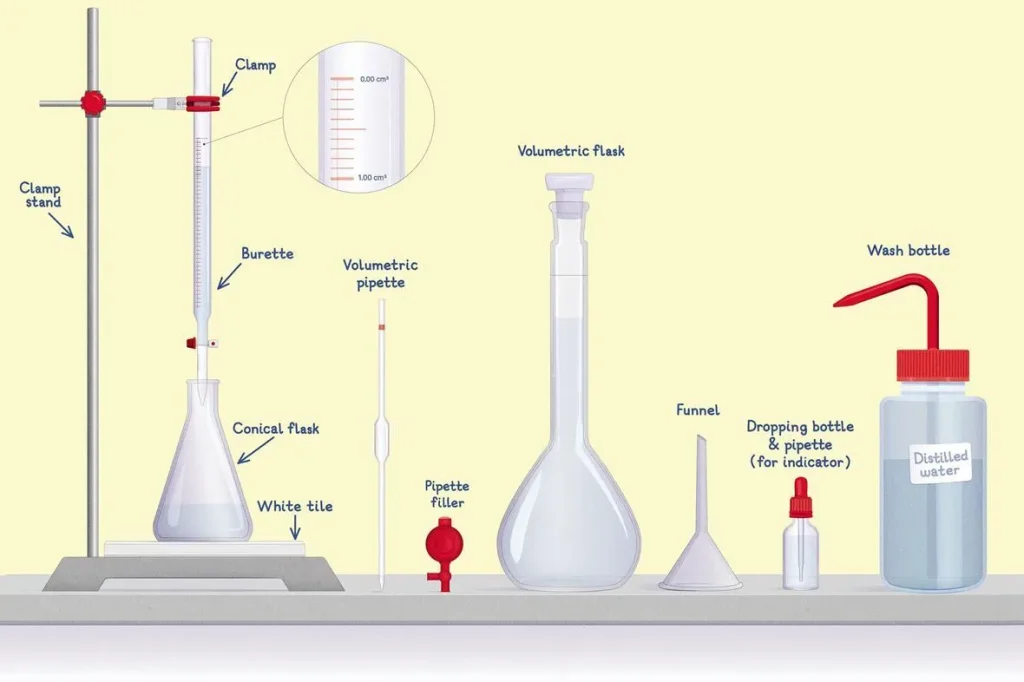
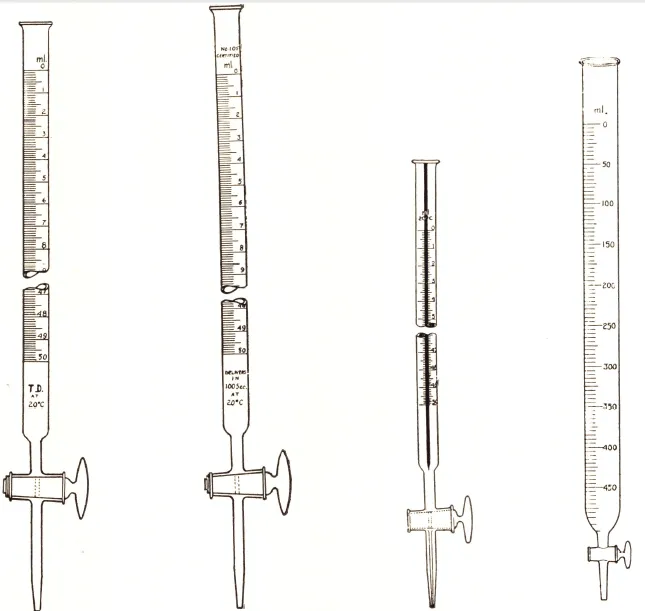
A burette is a long, graduated glass tube with a tap at the bottom, used in chemistry labs to accurately deliver measured volumes of liquid, especially during titrations. It allows for precise control of the liquid flow, helping determine the exact amount of a solution needed to react with another substance.
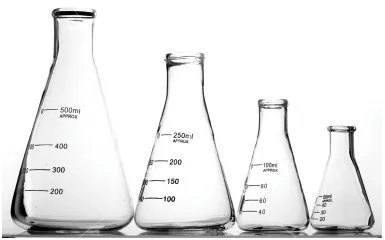
A conical flask, also known as an Erlenmeyer flask, is a glass container with a wide base that tapers to a narrow neck. It is commonly used in labs for mixing, heating, and storing liquids. The narrow neck helps prevent spills and reduces evaporation, making it ideal for titrations and reactions that need swirling without losing contents.
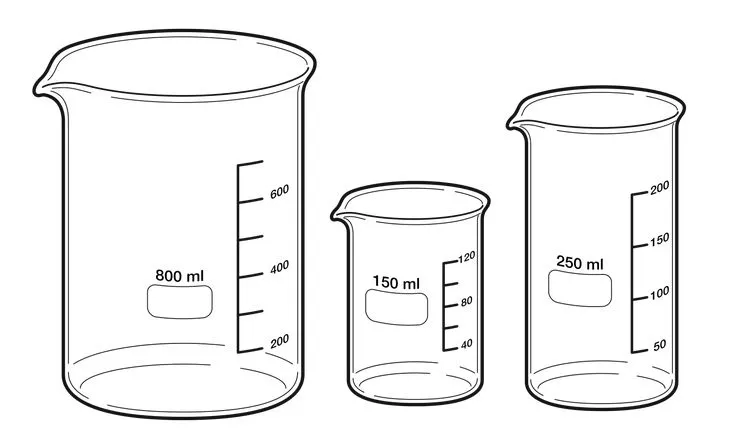
A beaker is a simple, cylindrical glass container with a flat bottom and a small spout for pouring. It’s commonly used in laboratories for mixing, stirring, heating, and measuring liquids (though not very precisely). Beakers come in various sizes and are often marked with volume graduations for rough measurements.
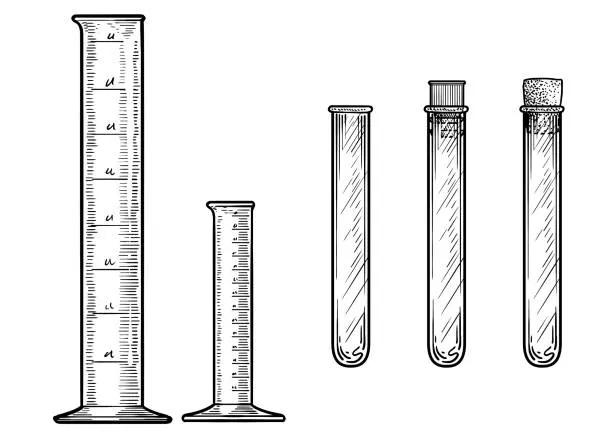
A measurement tube in chemistry typically refers to a graduated cylinder or measuring tube used for accurately measuring liquid volumes in experiments.
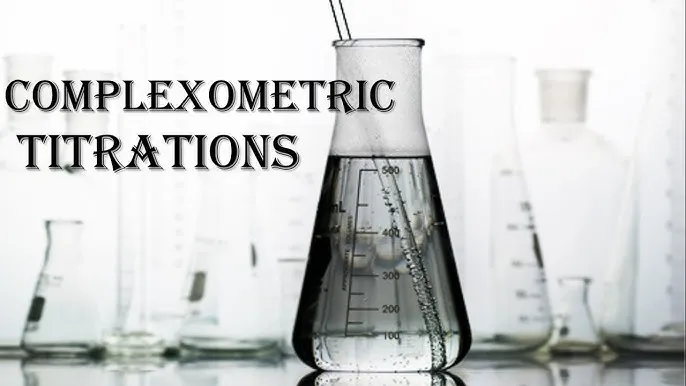
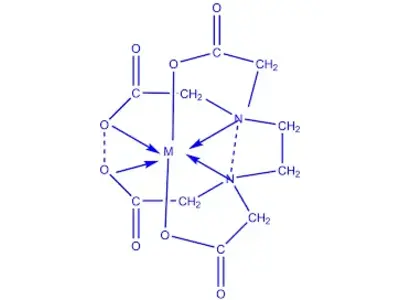
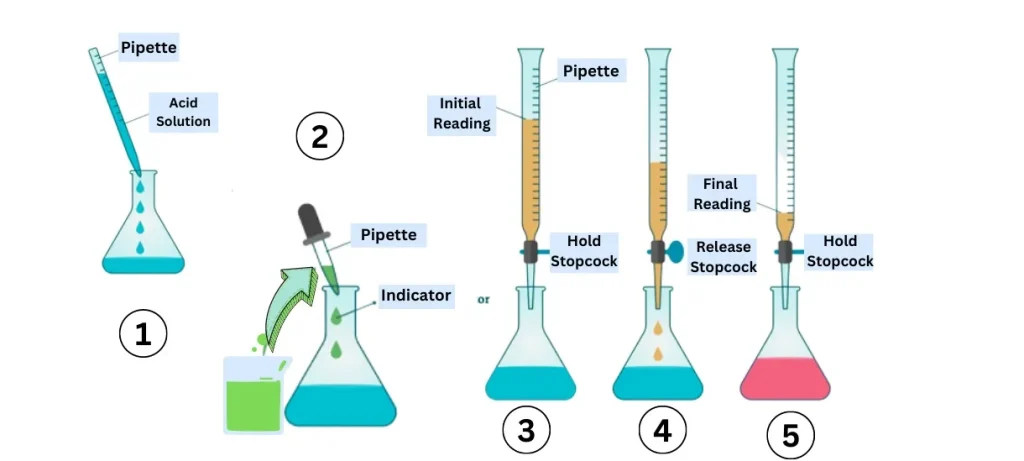
Determination of total hardness by complexometric titration method.
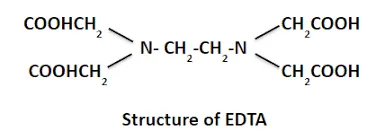
Hardness of water is mainly caused by the presence of calcium (Ca²⁺) and magnesium (Mg²⁺) ions. In complexometric titration, these metal ions are quantitatively estimated using EDTA (Ethylenediaminetetraacetic acid), a chelating agent that forms stable, colorless complexes with them.
| Trial | Initial Reading (mL) | Final Reading (mL) | EDTA Used (V₂ in mL) | Hardness (mg/L) |
|---|---|---|---|---|
| 1 | 0.0 | 2.7 | 2.7 | 0.27 |
| 2 | 2.7 | 5.0 | 2.3 | 0.23 |
| 3 | 5.0 | 7.5 | 2.5 | 0.25 |
| Average Hardness | 0.25 mg/L | |||
Hardness = (V2 × C2 × 100) / V1
= (0.25 × 100 x 103 × 100) / 10
= 250 ppm
EDTA complexometric titration is a widely used method to determine metal ion concentrations, especially calcium and magnesium in water. Its interaction with sustainable development goals is important in several ways:
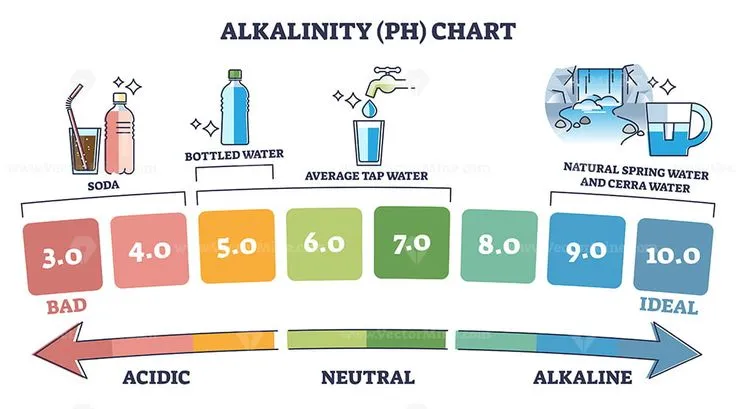
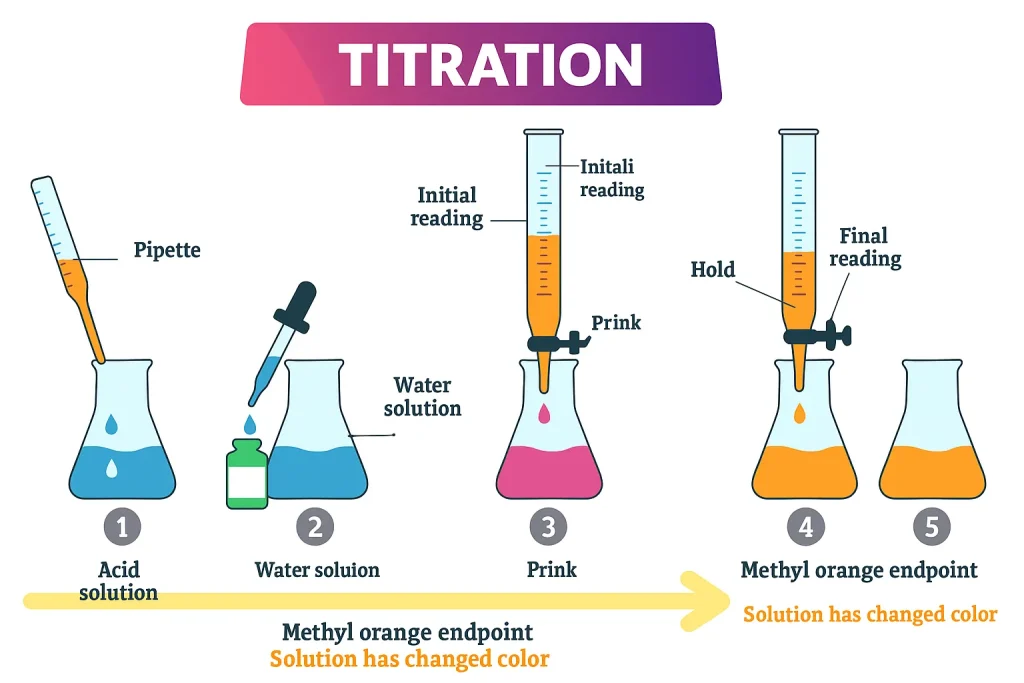
Determine the Alkalinity of given water samples.
Water sample, standard sulfuric acid (H₂SO₄) or hydrochloric acid (HCl), phenolphthalein indicator, methyl orange indicator, distilled water.
Alkalinity of water refers to its capacity to neutralize acids and is primarily due to the presence of hydroxide (OH⁻), carbonate (CO₃²⁻), and bicarbonate (HCO₃⁻) ions. It plays a vital role in water chemistry as it affects the pH and buffering capacity of natural and treated water.
To determine alkalinity, we titrate the water sample using a standard acid solution (usually H₂SO₄ or HCl) with two indicators:
Step 1: Titration with Phenolphthalein
This neutralizes OH⁻ and half of CO₃²⁻:
The volume of acid used up to this point is noted as P (Phenolphthalein alkalinity).
Step 2: Titration with Methyl Orange
This neutralizes the remaining CO₃²⁻ (converted to HCO₃⁻ in step 1) and all the HCO₃⁻:
The total volume of acid used (from the start till methyl orange endpoint) is noted as T (Total alkalinity).
Chemical Reactions Involved
By analyzing P and T, you can determine the type of alkalinity present:
| Condition | Inference |
|---|---|
| P = 0 | Only bicarbonate present |
| P = T | Only hydroxide present |
| P = ½T | Only carbonate present |
| P < ½T | Carbonate and bicarbonate |
| P > ½T | Hydroxide and carbonate |
| S. No | Volume of solution taken in titration flask (ml) | Burette Reading Initial | Burette Reading Final | Volume of titrant used (ml) |
|---|---|---|---|---|
| 1 | 10 ml | 0.9 | 3.5 | 2.6 |
| 2 | 10 ml | 2.7 | 5.4 | 2.7 |
| 3 | 10 ml | 2.3 | 5.8 | 3.5 |
| 4 | 10 ml | 3.5 | 6.2 | 2.7 |
Equivalent of phenolphthalein: 3.2 ml
| S. No | Volume of solution taken in titration flask (ml) | Burette Reading Initial | Burette Reading Final | Volume of titrant used (ml) |
|---|---|---|---|---|
| 1 | 10 ml | 4.9 | 9.6 | 4.7 |
| 2 | 10 ml | 1.9 | 6.8 | 4.9 |
| 3 | 10 ml | 1.9 | 6.8 | 4.9 |
| 4 | 10 ml | 1.9 | 6.8 | 4.9 |
Equivalent by methyl orange: 5.8 ml
N₁V₁ = N₂V₂
N₁ × 10 = 0.1 × 3.2
N₁ × 10 = 0.32
N₁ = 0.32 / 10
N₁ = 0.032 N

Alkalinity = 0.032 × 50 × 1000 mg/l
= 1600 ppm N₁V₁ = N₂V₂
N₁ × 10 = 0.1 × 1.8
N₁ × 10 = 0.18
N₁ = 0.18 / 10
N₁ = 0.018 N
Alkalinity = 0.018 × 50 × 1000 mg/l
= 900 ppm Alkalinity of phenolphthalein = 1600 ppm Total Alkalinity of methyl orange = 900 ppm m = (P - T) m = 700 ppm Methyl orange alkalinity
Maintains appropriate pH and buffering capacity (supports SDG 6 – Clean Water and Sanitation).
Proper alkalinity supports biodiversity and prevents harmful pH shifts.
Balanced alkalinity enhances soil health and crop yield.
Avoids over-treatment with acids or bases (supports SDG 12 – Responsible Consumption and Production).
Less corrosion and scaling, extending equipment lifespan and reducing resource consumption.

8130 - 0737-38
9220228653